
How to Know if I Have Snakes in My Garden in South Africa?

Although some are harmless, snakes can make even the bravest person quiver at the knees. Many people have a healthy fear of snakes, and knowing whether you have one (or more) in your garden can be important, especially if it’s venomous. Here are some tips on how to spot signs of having a snake in your garden, along with some of the most common species of snakes in South Africa.
What signs are there that snakes could be in your garden?
Snakes don’t give us many signs that they are around, since they’re adept at hiding under rock piles and in parts of our garden. You can look out for shed skins and winding trails in sandy surfaces. Other than this, understanding the species of snakes in your area, their sources of food, and where they like to shelter can help you spot areas of risk.
It’s important to call in a pest management company with an experienced pest control specialist to remove and work with snakes. They are wild animals, which means they bite and can cause harm. Do not try to pick them up or kill them yourself.
Top Common Snake Species in South Africa and How to Get Rid of Them
Are you worried about snakes hiding in your crawl spaces, in wood piles, around bird feeders in your garden, or in your commercial landscape’s dense brush? We are here to assist and bring you peace of mind. Let’s meet a few of the most common snake species in South Africa and find out more about how to get them away from your garden safely and humanely.
The Puff Adder
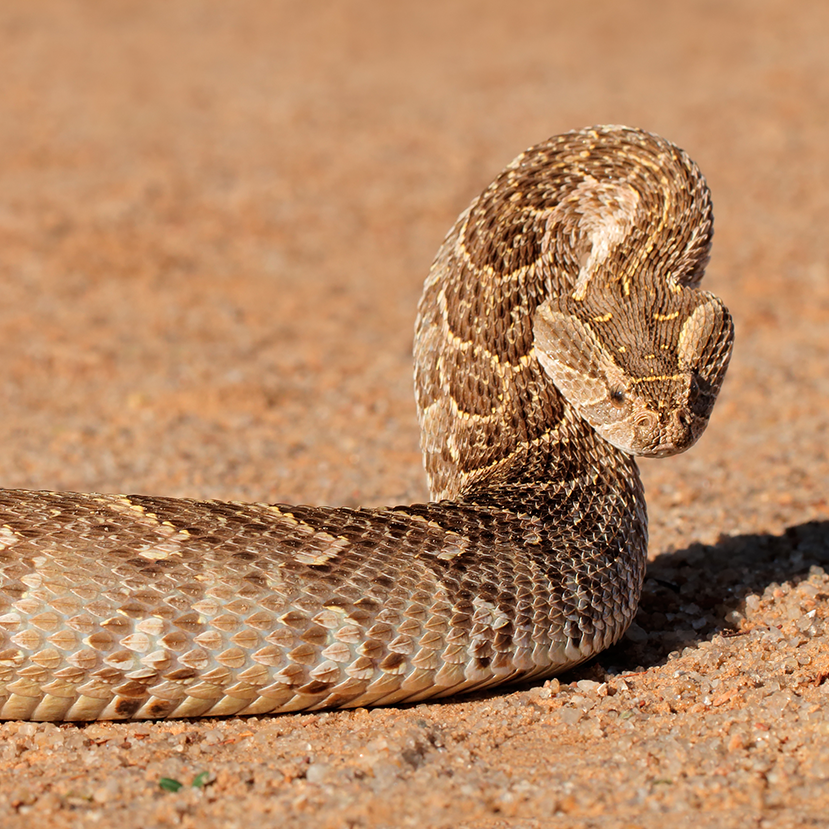
A well-known snake variety, the puff adder can be identified by its thick body and sluggish appearance, but don’t let that fool you. The puff adder has one of the quickest strikes in the world—around 7 metres per second! It relies on its ability to camouflage, which is characterised by a body that’s light brown with yellow and white chevron markings.
It tends to lie in wait, ambushing its prey. It doesn’t hiss or move when prey comes near, in order to not give away its position. Puff adders have a cytotoxic venom that is potent. This means that if you get bitten, you need to get to a hospital as soon as possible to get treated with polyvalent antivenom.
Luckily, adders aren’t likely to be found in gardens, although that doesn’t mean it’s impossible. If you spot one in your garden, you can call in Mostert’s pest control experts to assist with removal and assessing your garden.
The Cobra

Unfortunately, this snake species is often found around homes, searching for rats and other rodents. It’s a fairly common snake in South Africa and is found in most parts of Africa. It tends to live in a variety of habitats—around cultivated farmlands, open fields and dry countryside.
It’s most easily recognised for the part of its head called the hood. This is a flap of skin and muscle behind the head which flares, most likely to make it appear bigger and scarier to predators. Its particular type of venom is neurotoxic, which makes it an extremely dangerous snake.
Look out for it in leaf piles, around wood and rock/rubble piles, and long grass areas where its food sources, rodents, are abundant. If you are worried about cobras on your yard, our teams are ready to assist.
The Black Mamba
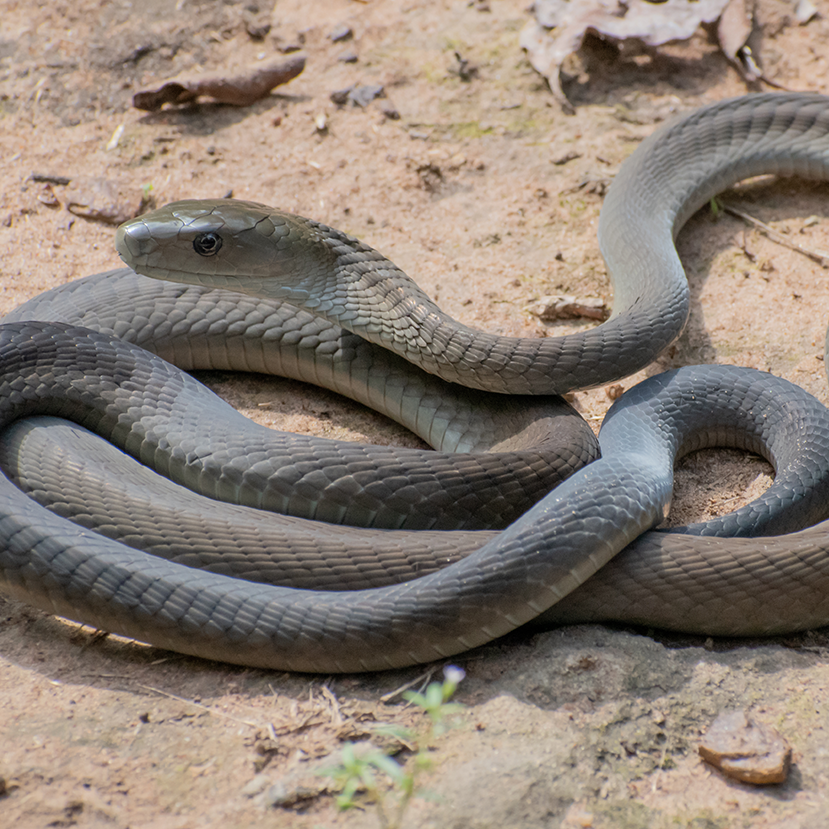
Related to cobras, mambas also have a hood, although theirs is smaller. It’s not an aggressive snake, but that’s little comfort, knowing it is considered to be the deadliest snake in the world. It grows up to a massive 4.2 metres in length and has a head shaped like a coffin. It can also lift as much as a third of its body off the floor.
It’s a tree-dweller, though it does venture onto the ground as well, so this is where you’d look for one in your garden. Despite its name, it’s not actually black in colour, but more often either olive green, dark olive, greyish brown or grey. The inside of its mouth is black, which is where its dreaded name comes from. If you have a black mamba on your property, natural repellents are not going to be an ideal solution, since they are so deadly. In the vast majority of cases, it is best to call in animal control specialists like Mostert to relocate these beautiful snakes.
The Green Mamba
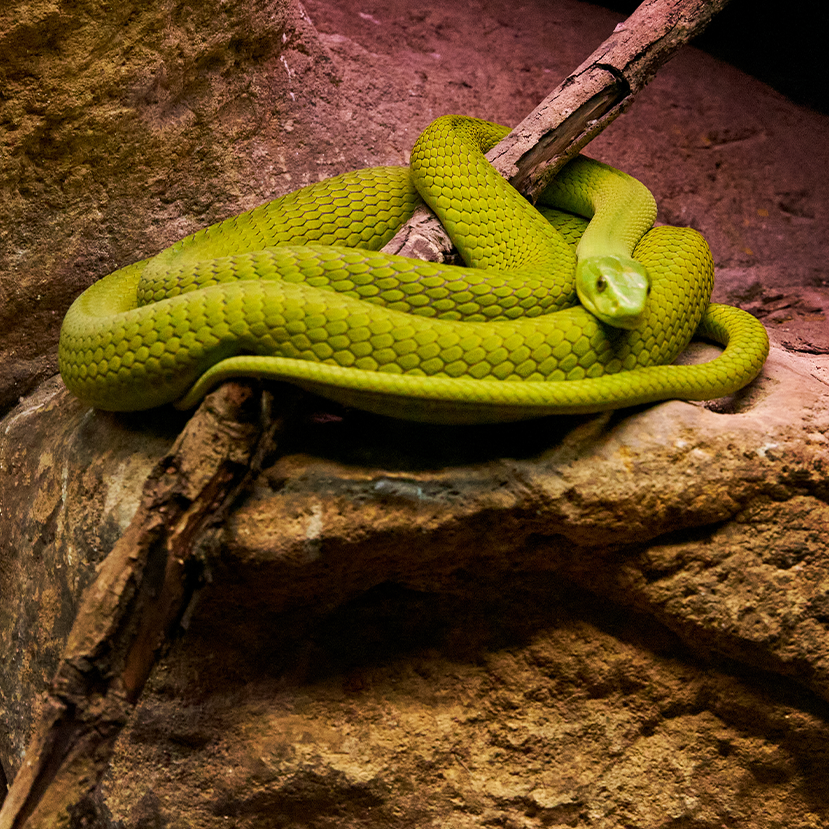
Smaller than black mambas, green mambas tend to reach around 1.8 metres in length, but they’ve been known to grow up to 3.7 metres. Their bodies are thin with green scales. They are highly venomous and hunt during the day for birds, lizards, rodents, and other small animals.
These beneficial reptiles are not particularly aggressive and prefer to flee than fight when in danger, only attacking if there is no escape route. The Green Mamba’s venom is neurotoxic, which means a hospital visit for antivenom as soon as possible after a bite is in order.
It’s usually found in coastal areas of KwaZulu Natal. It prefers moist conditions, so look out for one near bird baths and garden ponds. Our natural pest control experts in your area can come assist if you find these poisonous snakes on your property or near bodies of water.
The Boomslang
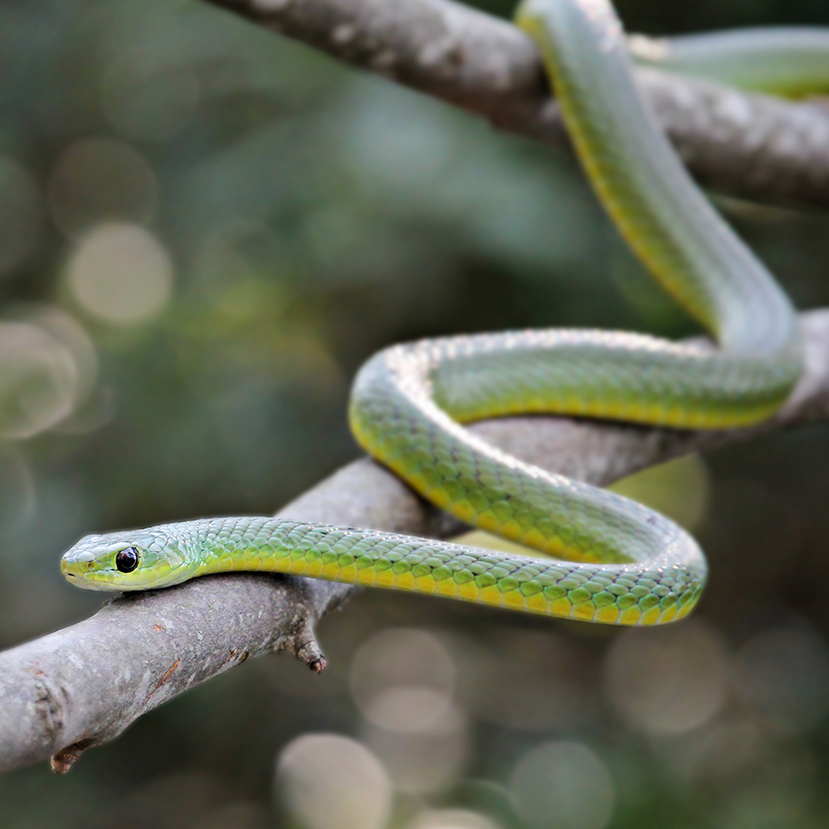
Named after the Afrikaans words for “tree” and “snake, the Boomslang has built an international reputation as a beautiful but venomous species. With extra-large eyes, snake lovers think it is gorgeous, while others may find it intimidating. It tends to live in trees, almost gliding as it moves, and is found in most areas around South Africa except for areas with desert conditions.
The Boomslang is another highly venomous snake, with a hemotoxic venom, which means it damages the circulatory system and muscle tissue and causes swelling, haemorrhage, and necrosis. It also has an anti-blood clotting mechanism, which means the wound will bleed freely if left untreated.
Look out for it mostly in trees in your garden. Snake repellent isn’t an effective way to keep this native snake species away from your garden. If a Boomslang frequents your garden, don’t try to pick it up or kill it. Instead, call in experts like Mostert Pest Control to assist with the situation.
The Egg-Eating Snake
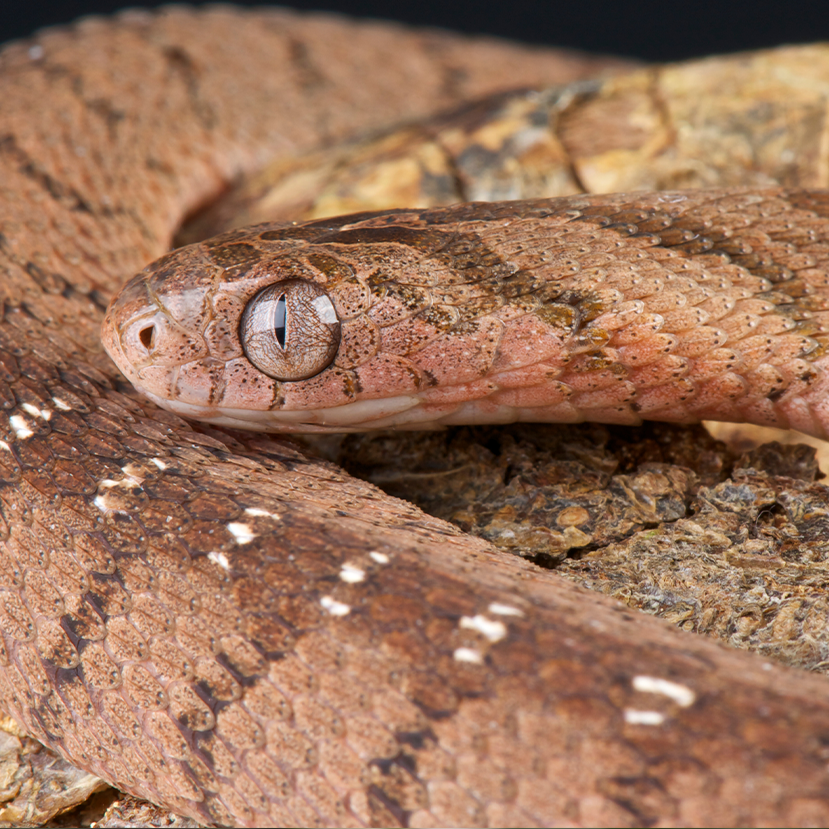
Unlike most other types of snakes, the egg-eating snake has little-to-no teeth. It is a natural predator to birds, as it exclusively eats their eggs. So, if you suspect you have one in your garden, look around places where birds are nesting. Its colourings and markings can change from snake to snake, with some having a light brown colour while others are grey. It has a dark V-shaped mark on its neck.
It grows to about 50cm in length and is nocturnal, which may make it harder to identify in your back garden. The snake skin scales rub together and make a sort of hissing sound, but don’t let that scare you too much—this species is one of the non-venomous snakes that are harmless to humans.
Need help with snake removal in South Africa?
Remember, many snakes can be extremely dangerous, so we recommend exercising extra care when getting rid of snakes. The best way approach to snake removal is to call in the experts, like us at Mostert Pest Control, to safely remove one from your garden. We have expert teams around the country who can handle the majority of snakes commonly found in South Africa.
7 Common Spiders in South Africa & How to Keep Them Out

Arachnophobia, or the fear of spiders, is fairly common. The leading theory on why this is so commonplace is that our ancestors evolved to fear spiders in order to stay alive, and that fear has carried over through to modern-day humans.
The reality is that most spiders in Southern Africa aren’t dangerous spiders. In fact, they’re important for our ecosystem, making sure that insect populations remain under control. But that doesn’t mean we want them in our households.
With this in mind, let’s look at some of the most common South African spider species you may encounter at your home or commercial space, and how to keep them outside where they belong.
1. South African Wolf Spider

Despite the scary-sounding name, the South African wolf spider is harmless to humans and pets, and they rarely try to bite. They’re typically quite small—not even the size of a R5 coin. They’re commonly found in gardens and seldom in the home, so you don’t need to worry too much about this arachnid crawling into your house.
If you’re worried that these critters are taking over your garden and that you may have an infestation on your hands, you can call in the experts. Our specialised pest control teams can help assess the situation and provide you with the best solution for your situation.
2. African Yellow Crab Spider

Despite this rather frightening-looking spider, the crab spider is harmless to people and pets. It comes in a variety of colours, including yellow, blue, and white. Their profile is broad and with their eight legs clumped together to help them camouflage themselves.
They’re not usually found in homes, preferring rather to live on flowers that match their colours and in veld areas. If you are worried about an infestation of this kind of spider, our specialist teams in your area are ready to assist and advise you.
3. Red Roman Spiders

Red romans go by many names—sun spider, Kalahari Ferrari, and solifuge. There are over 1,000 species of this type found all over the world, including South Africa. They’re diurnal and nocturnal, meaning they can hunt in both the daytime and at night. Despite the name ‘sun spider’, they dislike sun and prefer to run into shade.
Is this an aggressive spider? No, but If you ask someone in South Africa who has come into contact with it, they may say yes. This is because it can seem like they’re running towards you, but in reality, they’re probably running for your shadow. They’re completely harmless, with a non-venomous bite which would feel more like a nip.
If you’re finding too many of this type of spider in your home or on your commercial property, contact Mostert Pest Control today, and we can assist with spider control measures.
4. Black Widow Spiders

Also known as button spiders, black widow is a name that drives fear into the hearts of many arachnophobes. This spider has a neurotoxic venom that requires victims to be hospitalised as soon as possible and treated with anti-venom. With this in mind, it’s just the females you need to worry about, as their fangs are long enough to pierce human flesh.
They have a characteristic red hourglass-looking mark on top. They’re often found in woodpiles (and may end up in homes by accident by being carried in with these), as well as in any dark, sheltering place such as boxes, Wendy houses, unused blankets and shoes, and crevices in decks and patios.
The best way to keep them out of your house is to keep your home neat and tidy, along with outside areas, fix cracks, seal openings, and install door sweeps to minimise entry into the home. If you’re noticing an abundance of these critters in spaces where they don’t belong, like on your stoep or in your office cafeteria garden, it may be time to call in the professionals. We’re here to help with just about any species of spider you may be worried about.
5. Yellow Sac Spiders

Sac spiders are usually found in plants and houses. They get their name from the silk sac they build under which they hide their eggs. They’re either cream-white to pale yellow or even a reddish-brown with a black or dark area around the mouth.
They’re considered to be medically important, which means sac spider bites can do damage to a human with its cytotoxic venom. Untreated, wounds can go necrotic, meaning the cells in the tissue die. The only way to treat this is to go on antibiotics, so if you’re bitten by one, be sure to visit your doctor.
The best way to keep them out of your house is to make it difficult for them to enter at all. That means using caulk to close up small gaps that make for possible entry points. If it’s too late, and you’re finding them inside your buildings or dropping from the ceiling, don’t worry. Just call our expert exterminators to help sort out the infestation for you. Ass one of South Africa’s leading pest control companies, we know we have what it takes to sort out the problem fast.
6. Common Rain Spiders

Rain spiders in South Africa are often thought to be completely harmless, but they can, in fact, inflict quite a painful bite. They’re quite large—up to about 10cm—and are commonly found in homes in curtains or ceiling corners, especially after it rains (hence the name). They can resemble some species of baboon spiders, except that they have longer, skinnier legs. They’re brown, with white and black markings underneath their legs.
These spiders are ambush hunters, meaning they do not spin webs. Instead, they hunt insects, and have even been known to hunt spiders and lizards. Although their bite can be painful, you’re not likely to experience it, since they rarely bite, unless you’re dealing with a female in her nest. The bite is sore in the beginning, but becomes itchy with time and symptoms fade within a few hours. It is not deadly.
To discourage them from entering your house, you can spray windows, doors, and bricks around entryways with citronella. If a rain spider is holding your curtains hostage, our experts are more than willing to assist. Give us a call today.
7. African Violin Spider

Violin spiders are ranked as ‘medically important’ by the African Snake Bite Institute, meaning that their bite contains a cytotoxic venom which can lead to tissue damage. In other words, if you get bitten by one, go to the doctor, clinic, or hospital as soon as possible.
Having said that, don’t be too scared—there are no recorded deaths from violin spider bites. They’re also shy of humans and tend to run off when a person comes near. They’re mostly found in houses and garages in dark areas and under possessions. So to keep them out, keep a neat and tidy home and garage.
If you are finding these in too large numbers for your comfort in your storage spaces or living spaces, you can contact our expert pest control teams to assist with the issue.
Help Me Get Rid of Spiders, Please.
If you’ve got a spider problem in your home and aren’t sure how to deal with it, you can get a free quote on our website or call or email us. We have specialists throughout South Africa that know how to deal with each species, either relocating them to natural habitats, exterminating, fumigating, or more. Our specialist pest controllers have the know-how and experience needed to keep every type of spider away from your home or office using methods that are the best option for each situation.