
Should I Worry if I Have Crickets?
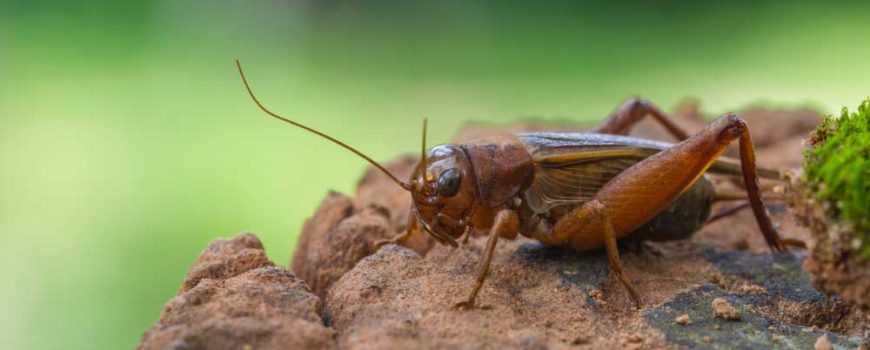
“Should I worry if I have crickets? Surprisingly, crickets can actually cause a lot of damage.”
The most common South African cricket is the Mole Cricket. The scientific name is Gryllotalpa Africana, and you can find this species throughout South Africa. We also find this species in Australia, Asia, and throughout the continent of Africa. It is even in the Americas.
Identification of the Mole Cricket
- They burrow under the soil surface in gardens and fields. These burrows are up to 1 meter deep!
- Mole crickets love to chew at the roots of plants. Mole crickets feed on the basal parts of plants.
- They stunt the growth of a plant.
- One of the very first signs of mole crickets is the sickly appearance of once healthy plants.
- It is often too late by the time we detect cricket infestations.
What Should I Look Out For?
- Adult male mole crickets have short antennae. Their body is plump and yellowish-brown.
- They use their powerful front legs to burrow. These insects have shovel-like front legs.
- They do not mate on the surface. Instead, mating takes place underground in warm moist environments.
- Female crickets create a chamber where they lay their eggs.
- Female mole crickets can lay up to 200 eggs at a time, with incubation taking about 12 days.
- They protect nymphs in the nest chamber where they will nest for up to three weeks.
- Of special interest is that nymphs can take as long as two years to enter the adult stage of development.
What Kind of Damage Can They Cause?
They can cause untold damage to many crops, sports fields, lawns, and outdoor areas. They love waterlogged and moist soil. This attracts them to crops and sports fields.
Here, they can find a never-ending source of food where the soil is well-irrigated. This is an ideal place for nesting and breeding for these destructive pests.
How Likely is it that They Will Destroy Your Crops?
They destroy many crops. Some of these include maize, oats, beans, strawberries, sugar beet, potatoes, and barley. These insects are also responsible for destroying young fruit trees. They even cause havoc to seedlings.
They attack grassy patches. This can cause brown patches and dead grass. These appear in sports fields, golf courses, and residential lawns.
What About Other Species of Crickets?
Mole crickets might cause the most damage to your crops and playing fields, but there are other types of crickets that cause damage too. Tree crickets are beneficial to humans but can damage twigs during egg laying. The black cricket is loud but harmless, although an infestation of them can damage clothing and material items.
Some species of insects can be a source of protein, such as edible crickets. it is unlikely that you will find them in your garden. Field crickets and house crickets are also responsible for causing extensive damage both inside and out. Not only are they noisy and unpleasant to live with, but the damage they can cause could become extensive.
To get rid of crickets, start from the outside in. Reduce moist patches and keep grass mowed. Weed flower beds and remove any building rubble. Remove woodpiles to discourage infestations.
You can use microencapsulated products and wettable powders for effective control. Pour these into cracks and corners. Apply these products to the hiding places crickets are attracted to.
How to Tackle a Cricket Infestation
Never use dangerous chemical DIY methods to control these critters. It is far preferable to call on expert cricket exterminators.
They will eradicate and control the problem. Certain chemical products are toxic to aquatic life, even in small doses. For an expert and safe job, always choose a professional.
You can also control them through natural methods. Ants destroy these insects’ eggs. There are other nocturnal predators that prey on them once they come to the surface.
Ploughing land where crops grow will expose nests and pests hiding underground. Predators preying on them will end these to an extent.
Shining a Light on the Problem
Shining a light on the cricket problem will move them away from your home at night. Remove bright outside lights and close your blinds to distract them. Place lights away from your home.
This way, these bugs won’t bother you at night. Another trick would be to change outside light bulbs to less-attractive yellow bulbs. You could also install sodium vapour lamps.
Mostert is Making a Difference
Most Pest Control professionals will assess the problem. Pests and humans have been co existing since the beginning of time.
We tackle pest issues right away. Not all pest challenges are long term. With each new season, new life emerges.
With it, new batches of insects emerge. Partnering with your professional pest control specialists will save you money and time. We will put a long-term treatment plan of action in place to ensure we take care of the problem for good.
